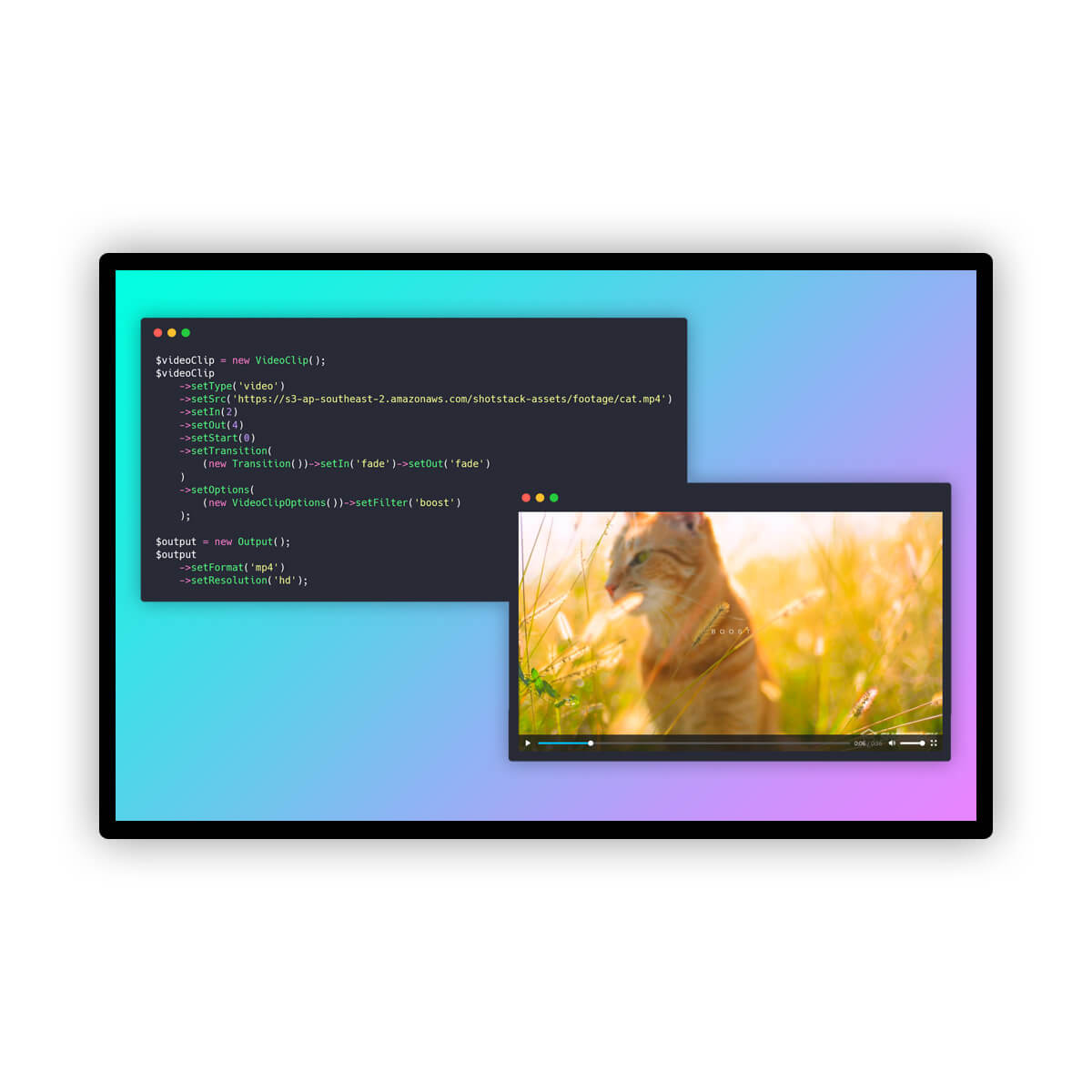
Developers often mistake FFmpeg and Video APIs as direct competitors, but they operate at different architectural layers. FFmpeg is a powerful, open-source media processing engine, while a Video API is a managed system that wraps encoding with orchestration, storage, and delivery. This guide analyzes the operational costs, complexity, and use cases for each approach to help you decide whether to build or buy your video rendering infrastructure.
Context and practical value
The source compares FFmpeg and Video APIs, highlighting that FFmpeg is a component requiring significant infrastructure for production, while Video APIs offer a managed system with orchestration and delivery. It provides code examples for both approaches and discusses their suitability for different use cases, including AI integration.
AtlasRepo structures the comparison into clear architectural layers, emphasizing the operational overhead of FFmpeg versus the abstraction of Video APIs. It adds practical steps for decision-making and highlights the specific integration benefits of Video APIs for AI agents, providing a more actionable guide for developers.
Key takeaways
- FFmpeg is a component requiring significant surrounding infrastructure for production use, whereas Video APIs provide a complete managed system.
- Building with FFmpeg demands handling job queues, subprocess management, storage, concurrency limits, and environment consistency.
- Video APIs abstract infrastructure complexity, allowing developers to focus on application logic rather than server maintenance.
- AI agents integrate more naturally with Video APIs due to structured JSON inputs and asynchronous webhook callbacks.
- FFmpeg remains superior for low-level codec control, offline batch processing, and embedded or privacy-sensitive environments.
The Architectural Distinction
The core difference lies in scope. FFmpeg handles the encoding step, decoding, filtering, and muxing media. A Video API, however, packages this encoding step within a broader system that includes asset handling, asynchronous execution, status tracking, and delivery. When deploying FFmpeg in production, you are not just running a binary; you are building a rendering system around it. This involves creating an inbound queue, managing a worker pool with CPU and memory limits, handling storage for assets and outputs, and maintaining a status layer to track job states. In contrast, a Video API compresses this pipeline behind an HTTP interface, where you submit a JSON payload and receive a render ID or webhook callback.
Operational Complexity of FFmpeg
While FFmpeg is free and powerful, production readiness requires substantial engineering effort. Key challenges include managing job queues (e.g., SQS, RabbitMQ) to handle retries and dead-letter queues, and subprocess management to monitor FFmpeg processes, capture stderr logs, and handle timeouts. Storage management is also critical, involving downloading source assets, writing outputs, and cleaning up temporary files to prevent disk saturation. Furthermore, concurrency must be carefully tuned to avoid saturating machine resources, and environment consistency must be maintained by pinning FFmpeg builds and dependencies in Docker containers to ensure reproducible results across different servers.
Scalability and Concurrency
The difference becomes apparent at scale. Rendering 50 videos concurrently with FFmpeg requires a robust worker pool that can handle parallel subprocesses, manage resource contention, and validate outputs using tools like ffprobe. A single failure in a long-running encode can waste significant compute resources. With a Video API, concurrency is managed by the provider. Your application simply sends HTTP requests, and the API handles the queuing and processing. This shifts the burden from infrastructure management to application-level logic, such as handling rate limits and processing webhook callbacks for completed renders.
Integration with AI Agents
Modern AI agents rely on structured tool calls, making Video APIs a natural fit. An agent can call a function with a JSON schema containing product details and media URLs, receiving a render ID in return. This asynchronous pattern aligns well with AI workflows, allowing the agent to continue other tasks while the video renders. Integrating FFmpeg directly into an agent is more complex, requiring the agent to construct command-line arguments, which must then be sanitized and executed by a backend service. This adds layers of error handling and validation that can disrupt the agent's workflow, making a managed API a cleaner interface for AI-driven video generation.
When to Choose FFmpeg
FFmpeg is the preferred choice when low-level codec control is essential, such as tuning CRF values, bitrate ladders, or custom filter graphs for broadcast or archival workflows. It is also ideal for research and prototyping, where direct access to the command line allows for rapid experimentation without configuring hosted accounts. Additionally, for offline batch processing of fixed datasets or embedded systems where network access is limited or privacy concerns dictate local processing, FFmpeg’s libraries provide the necessary flexibility and control that managed APIs may not expose.
Practical next steps
- Audit your current video rendering needs to determine if you require low-level codec control or if a standardized output suffices.
- Estimate the engineering cost of building and maintaining a job queue, worker pool, and storage system versus the per-render cost of a Video API.
- Prototype an AI agent workflow using a Video API to evaluate the ease of integration compared to building a custom FFmpeg wrapper.
- Implement ffprobe validation in any FFmpeg-based pipeline to ensure output integrity, as a zero exit code does not guarantee a valid video file.
Limits and verification
- This analysis is based on general architectural patterns and may not account for specific vendor pricing models or unique enterprise security requirements.
- The performance comparison assumes standard cloud infrastructure; on-premise setups with specialized hardware may alter the cost-benefit analysis.
FAQ
Is FFmpeg free to use in commercial products?
Yes, FFmpeg is open-source and free to use, but you are responsible for all infrastructure and maintenance costs associated with running it in production.
Can I use FFmpeg with AI agents?
Yes, but it requires a backend service to sanitize inputs, manage subprocesses, and handle errors, making it more complex than using a structured Video API.
What is the main advantage of a Video API?
A Video API abstracts the complexity of infrastructure management, including scaling, storage, and job orchestration, allowing developers to focus on application logic.